The Silver 3D Text Style Effect: A Strategic Design Language for Clarity, Confidence, and Contemporary Brand Expression
In today’s saturated digital landscape—where attention is fragmented, interfaces are increasingly ambient, and visual hierarchy must communicate intent in under 0.5 seconds—the Silver 3D Text Style Effect has emerged not as a passing aesthetic flourish, but as a deliberate, context-aware design language. It transcends decorative layering: it’s a calibrated synthesis of depth, reflectivity, material fidelity, and spatial intentionality that signals precision, sophistication, and quiet authority. For professionals, creators, entrepreneurs, marketers, freelancers, and design-adjacent enthusiasts, understanding and applying the Silver 3D Text Style Effect isn’t about chasing trends—it’s about aligning visual expression with evolving audience expectations around trust, clarity, and tactile realism in digital spaces.
What Exactly Is the Silver 3D Text Style Effect?
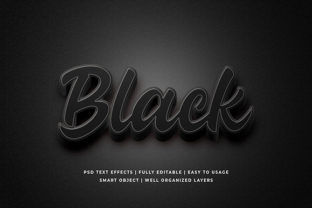
The Silver 3D Text Style Effect refers to a specific typographic treatment where text appears to possess physical dimensionality—depth, bevel, ambient occlusion—and surface properties reminiscent of polished silver: cool tonal neutrality, controlled specular highlights, subtle gradient transitions from light gray to near-white, and a matte-to-satin finish rather than chrome-like glare. Unlike generic “3D text” filters that rely on heavy shadows or exaggerated extrusion, the Silver variant prioritizes restraint, optical balance, and contextual integration.
Technically, it’s achieved through layered CSS properties (for web), precise layer blending modes (in Figma or Adobe tools), or shader-based rendering (in WebGL or Unity environments). Key components include:
- Controlled extrusion depth—typically between 2–6px—to avoid visual clutter while reinforcing form;
- Directional lighting simulation—a soft top-left light source that creates consistent highlight and shadow gradients across characters;
- Material-based shading—using linear or radial gradients that mimic how light interacts with brushed or anodized metal surfaces;
- Subtle ambient occlusion—a soft darkening along inner edges to reinforce perceived volume without sacrificing legibility;
- Neutral chromatic base—anchored in sRGB grays (#C0C0C0 to #E0E0E0), avoiding warm undertones or blue shifts that compromise neutrality.
This isn’t just “text with a shadow.” It’s typography engineered for perceptual weight—designed to sit confidently within modern UIs, presentation decks, brand guidelines, and motion assets without competing for attention or undermining accessibility.
Beyond Aesthetics: Why This Effect Resonates Now
The rise of the Silver 3D Text Style Effect maps directly to three converging shifts across creative practice, business communication, and interface design:
1. The Demand for “Quiet Confidence” in Visual Identity
Brands and professionals are moving away from loud, saturated, or overly animated identities toward what designers call quiet confidence: understated yet unmistakable presence. Think of enterprise SaaS dashboards, fintech platforms, or B2B thought leadership materials—spaces where credibility, stability, and forward-thinking execution matter more than virality. Silver, as a color and material concept, carries associations of conductivity, precision engineering, and time-tested reliability. When rendered in 3D text form, it conveys competence without arrogance—a visual shorthand for “we’ve considered the details, down to the light angle.”
2. The Maturation of Digital Materiality
Since the flat-design era peaked, interface design has steadily reintroduced tactility—not as ornament, but as cognitive scaffolding. Glass morphism, neumorphism, and now refined metallic treatments like the Silver 3D Text Style Effect respond to users’ subconscious need for spatial cues in screen-based environments. Depth signals interactivity; surface quality implies durability; reflectivity suggests responsiveness. In a world where users navigate complex workflows across devices—from foldables to AR overlays—these micro-signals reduce cognitive load. A Silver 3D headline doesn’t just look “nice”; it tells the user, “This element is primary. It’s stable. It belongs here.”
3. The Professionalization of Creator Tools and Output Standards
Today’s freelancer isn’t just delivering a logo—they’re shipping a full brand system, including motion guidelines, dark-mode variants, and responsive UI components. Tools like Figma, Webflow, and even Canva now support advanced layer effects, variable fonts, and CSS custom properties that make implementing the Silver 3D Text Style Effect both feasible and scalable. No longer reserved for high-budget agencies, this effect is becoming part of the baseline toolkit for serious practitioners who understand that consistency across touchpoints—email headers, pitch decks, landing pages, social banners—is non-negotiable for credibility.
Practical Integration: Where and How It Adds Value
Adopting the Silver 3D Text Style Effect isn’t about applying it everywhere. Its power lies in strategic placement—where hierarchy, memorability, and tone converge.
Case in Point: Dashboard Headlines & Data Labels
In analytics or operations dashboards, key metrics often compete with dense data tables and real-time charts. Applying the Silver 3D Text Style Effect to top-level KPI labels (e.g., “Q3 Revenue Growth: +12.4%”) creates immediate visual anchoring. The effect enhances scannability without introducing color noise—critical for teams working across varied display calibrations or in low-light control rooms.
Case in Point: Product Launch Assets
When launching a hardware-adjacent software tool—say, an AI-powered industrial sensor platform—the Silver 3D Text Style Effect bridges physical and digital perception. Used on hero banners or spec sheets, it subtly echoes the brushed-metal casing of the device itself. This coherence strengthens brand storytelling by making the interface feel like a natural extension of the product’s material logic—not a separate layer of abstraction.
Case in Point: Executive Presentations
For founders and senior marketers presenting to investors or cross-functional leadership, slide headlines benefit from restrained gravitas. A Silver 3D treatment on section titles (“Strategic Differentiation”, “Scalability Architecture”) conveys rigor and preparation—especially when paired with clean sans-serif typefaces like Inter, IBM Plex, or Neue Haas Grotesk. It avoids the sterility of flat text while sidestepping the informality of drop shadows or gradients.
Technical Considerations for Responsible Implementation
Like any powerful stylistic tool, the Silver 3D Text Style Effect requires intentionality to avoid pitfalls:
- Legibility First: Always test contrast ratios against WCAG 2.1 AA standards—even with neutral grays, background luminance matters. Avoid applying the effect to body copy or small UI labels.
- Performance Awareness: Heavy CSS 3D transforms or excessive layering can impact rendering performance on lower-end devices. Prefer optimized SVG exports or simplified CSS filters (e.g.,
text-shadowstacks) for static use cases. - Contextual Consistency: Don’t mix Silver 3D text with neon glows, cartoonish outlines, or distressed textures in the same composition. Its strength is tonal cohesion—not contrast-for-contrast’s-sake.
- Accessibility Alignment: Ensure focus states, hover behaviors, and screen reader compatibility remain unaffected. The effect should enhance—not obscure—the semantic structure of your content.
Looking Ahead: Not a Trend, But a Design Principle in Evolution
The Silver 3D Text Style Effect reflects a broader maturation in how we think about digital expression: less as decoration, more as material communication. As spatial computing advances, as generative AI reshapes asset creation, and as audiences grow increasingly literate in visual semantics, the ability to convey meaning through nuanced surface, light, and depth will only increase in value.
What begins as a typographic technique is already informing adjacent practices—like the use of silver-toned 3D icons in design systems, or the adoption of metallic UI elements in voice-assistant interfaces designed for ambient environments. It’s a signpost pointing toward a future where digital artifacts don’t just function well, but feel trustworthy, grounded, and intentionally crafted.
For professionals building brands, products, or campaigns today, mastering the Silver 3D Text Style Effect isn’t about adding polish—it’s about deepening resonance. It’s choosing clarity over clutter, confidence over cliché, and craft over convenience. And in a world where perception shapes opportunity, that distinction isn’t stylistic. It’s strategic.