2020 Classic Blue 3D Text Effect Mockup: When and Why It Still Fits Design Workflows
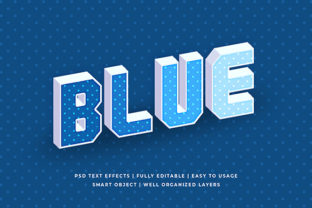
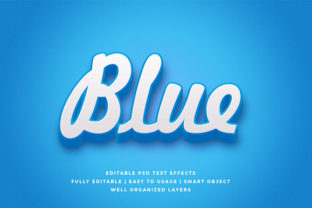
The 2020 Classic Blue 3D Text Effect Mockup is a layered PSD file designed to showcase typography with depth, lighting, and material realism—specifically using Pantone’s 2020 Color of the Year, Classic Blue (PMS 19-4052). Unlike generic 3D text generators or real-time rendering tools, this mockup delivers a fixed, high-fidelity visual preset: pre-configured shadows, bevels, ambient occlusion, and subtle metallic sheen—all aligned to evoke trust, calm, and professionalism. It’s not software—it’s a static but editable design asset intended for quick, consistent presentation of headlines, logos, or short phrases in branding, editorial, or marketing contexts.
How It Differs From Broader 3D Typography Solutions
Most designers encounter three broad categories when adding dimension to text: real-time 3D tools (like Blender or Adobe Substance), parametric generators (such as CSS 3D transforms or Figma plugins), and layered mockups like the 2020 Classic Blue 3D Text Effect Mockup. Each serves different stages of workflow and expertise.
Real-time 3D tools offer full control over geometry, lighting, and perspective—but demand time, technical familiarity, and hardware resources. A designer building a rotating product label animation may need that flexibility. But for a social media banner announcing a “Q3 Strategy Review,” that level of control is unnecessary overhead. Here, the 2020 Classic Blue 3D Text Effect Mockup acts as a precision shortcut: open the PSD, replace the smart object layer with your text, adjust size and spacing, and export. No render queue, no learning curve, no guesswork about light angles.
Parametric generators sit between the two—fast and editable, but often limited in material fidelity. Many produce flat extrusions with basic gradients or uniform shadows. The 2020 Classic Blue 3D Text Effect Mockup, by contrast, embeds nuanced lighting cues: a soft top-left key light, gentle falloff on vertical edges, and a slight blue-tinted ambient reflection that reinforces its namesake hue. That subtlety matters in contexts where tone and brand alignment are non-negotiable—think healthcare reports, academic conference materials, or financial dashboards.
Strengths and Practical Tradeoffs
The primary strength of the 2020 Classic Blue 3D Text Effect Mockup lies in its constrained scope. Because it’s built around one color, one lighting setup, and one surface treatment, it avoids the inconsistency that plagues ad-hoc 3D effects—where every headline looks slightly different due to manual adjustments. That consistency supports brand guidelines, especially for organizations with strict color usage policies.
However, that same constraint introduces tradeoffs. The mockup doesn’t support dynamic perspective shifts—you can’t tilt the text toward the viewer or rotate it freely without distorting the embedded lighting model. It also assumes a white or light neutral background; placing it over complex imagery or dark gradients often requires manual blending mode tweaks or layer masking. And while the Classic Blue tone reads clearly on screen, it may not translate well to print without CMYK conversion checks—especially if paired with adjacent spot colors.
Another practical limitation: scalability. Because it relies on raster-based layer effects (not vector extrusion), enlarging the composition beyond its native resolution risks visible pixelation along bevel edges. For large-format prints or retina displays at extreme sizes, vector alternatives—or exporting at 200% resolution from the start—become necessary.
Where It Fits Best (and Where It Doesn’t)
The 2020 Classic Blue 3D Text Effect Mockup fits most naturally in mid-fidelity presentation scenarios: pitch decks, internal stakeholder reviews, website hero sections, email headers, and digital signage assets where clarity, tone, and speed outweigh experimental variation. For example, a university communications team launching a “Resilience & Renewal” campaign used it across six departmental landing pages—keeping messaging visually unified without requiring each unit to recreate lighting logic from scratch.
It’s less suitable for projects demanding interactivity, motion, or multi-angle views. If you’re designing an animated explainer video where text rotates into frame, or building a web component that responds to scroll position, the static nature of the mockup becomes a bottleneck—not a benefit. Similarly, brands with vibrant, shifting palettes (e.g., tech startups using gradient overlays or duotone systems) will find Classic Blue too tonally prescriptive unless they’re intentionally leaning into its symbolic weight: stability, depth, and measured confidence.
Also consider audience context. Classic Blue resonates strongly in professional, institutional, or wellness-oriented spaces—but may feel overly formal for youth-focused campaigns, playful retail promotions, or creative portfolios emphasizing disruption. In those cases, a neutral gray or matte black 3D mockup—or even flat, bold typography with strategic negative space—often communicates more authentically.
Comparing Use Cases Across Real Projects
A nonprofit producing an annual impact report tested three approaches for its cover title: a custom Blender-rendered 3D wordmark, a Figma-based 3D generator, and the 2020 Classic Blue 3D Text Effect Mockup. The Blender version took 14 hours to refine lighting and export cleanly. The Figma generator delivered results in under five minutes—but lacked depth consistency across letterforms, making “IMPACT” look subtly uneven. The mockup landed in the middle: 20 minutes total, including font pairing and kerning adjustments, with predictable, publication-ready output.
In contrast, a SaaS company refreshing its dashboard UI explored the same options for its main navigation labels. There, the 2020 Classic Blue 3D Text Effect Mockup was discarded early—not because it looked bad, but because interface text needs optical clarity at small sizes, and the mockup’s subtle bevels introduced visual noise below 24px. A simplified, single-shadow CSS effect proved more legible and performant.
Making the Call: Key Decision Factors
Before choosing the 2020 Classic Blue 3D Text Effect Mockup, ask these questions:
- Is color fidelity essential? If Classic Blue aligns with your palette—or if you’re deliberately invoking its 2020-era associations (calm amid uncertainty, grounded innovation)—it adds semantic value beyond aesthetics.
- What’s your output timeline? If you need polished, presentation-ready text within 30 minutes and have Photoshop access, it’s efficient. If you’re iterating rapidly across dozens of variants, a scriptable or template-based system may scale better.
- Where will it appear? Static digital displays, PDFs, or social thumbnails? Strong fit. Animated sequences, responsive web components, or tactile print applications? Likely not.
- Who maintains it? Teams with shared Photoshop standards and version control for layered files benefit most. Distributed teams relying on browser-based tools may find compatibility or handoff friction.
There’s no universal “best” 3D text solution—only what fits your constraints, goals, and audience expectations. The 2020 Classic Blue 3D Text Effect Mockup remains relevant not because it’s technically advanced, but because it solves a narrow problem exceptionally well: delivering emotionally coherent, production-ready dimensionality without complexity. When your priority is clarity, cohesion, and quiet authority—not novelty or motion—it’s worth keeping in your toolkit.