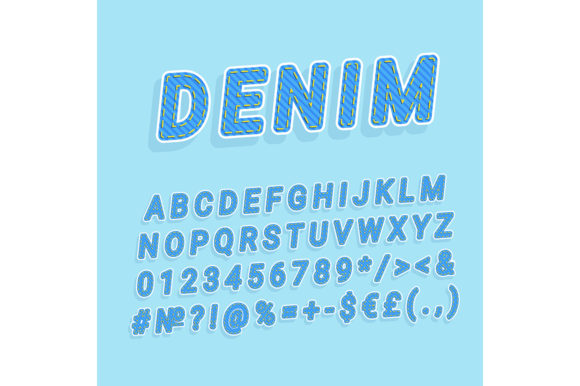
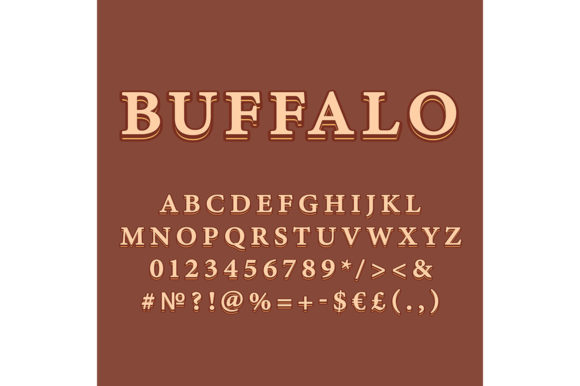
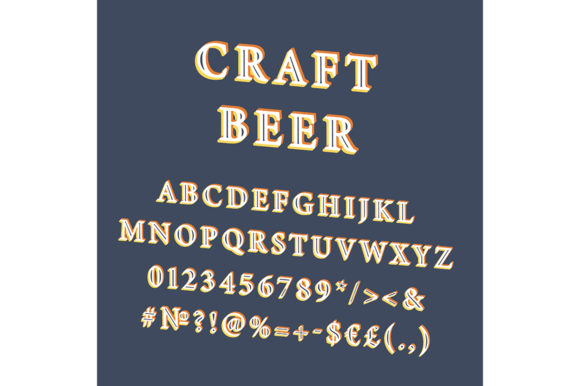
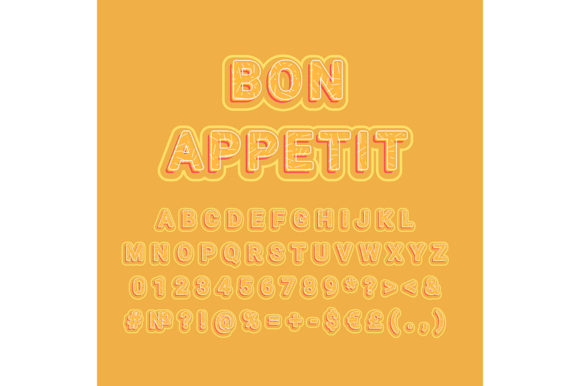
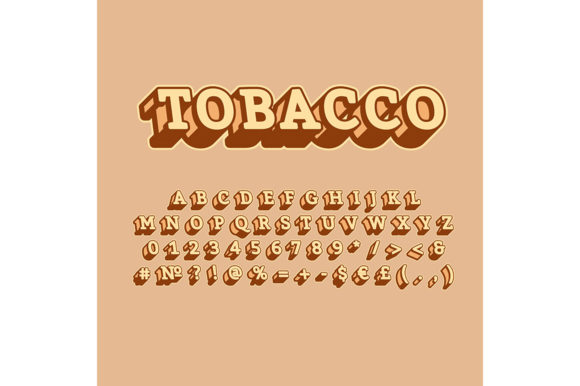
Bistro Vintage 3D Vector Alphabet Set
Typography isn’t just about legibility—it’s about tone, texture, and time. The Bistro Vintage 3D Vector Alphabet Set delivers all three with intention. It’s a hand-crafted collection of uppercase letters, numerals, and basic punctuation—designed in clean vector format, rendered with subtle 3D depth, and infused with the warmth of mid-century café signage, hand-painted shop fronts, and analog charm. No pixelation. No licensing surprises. Just scalable, editable, and deeply characterful letterforms ready for real work.
Why This Set Stands Out Among Vintage Fonts
Not all “vintage” type feels authentic—and not all 3D vectors hold up across formats. What makes the Bistro Vintage 3D Vector Alphabet Set different is its balance: it avoids cartoonish exaggeration while retaining tactile presence. Each glyph features soft bevels, gentle shadows, and carefully calibrated highlights—not flat layers stacked for effect, but dimensional forms built to read clearly at small sizes and command attention at large ones.
Because it’s delivered as individual vector files (AI, EPS, SVG), you’re not locked into a font file that may render inconsistently across platforms or require embedding permissions. You can recolor, resize, layer, distort, or combine letters without quality loss. That flexibility matters—especially when your project spans print, web, motion, or physical fabrication.
Creative Uses Across Real Projects
This set thrives where personality meets precision. Here’s how different creators are applying it—not as decoration, but as functional design material:
- Small business owners use individual letters to build custom storefront signs, menu boards, and branded packaging—mixing Bistro letters with hand-drawn icons or spot illustrations for a cohesive, locally rooted identity.
- Educators and workshop leaders adapt the alphabet for classroom posters, literacy games, or tactile learning kits—exporting letters to vinyl cutters or laser engravers to create durable, sensory-rich teaching tools.
- Bloggers and content creators incorporate single glyphs into social media graphics—pairing “C” or “E” with minimalist photography to evoke concepts like “Craft,” “Eat,” or “Explore”—without relying on overused stock fonts.
- Freelance designers treat the set as modular components: extracting shadows separately to build layered depth in mockups, or using outlines alone for line-art versions ideal for embroidery or screen printing.
Adapting for Audience & Platform
How you use the Bistro Vintage 3D Vector Alphabet Set should shift with context—not just aesthetics. For example:
- On Instagram or Pinterest, simplify. Use one or two letters against high-contrast backgrounds; add subtle animation (like gentle rotation or parallax) in After Effects or Figma to highlight dimensionality without clutter.
- In email newsletters or PDF reports, prioritize readability. Stick to solid fills (no complex gradients), limit shadow intensity, and ensure letter spacing remains generous—especially for accessibility.
- For physical products—think ceramic mugs, tote bags, or greeting cards—test export settings first. Convert text to outlines, embed fonts used alongside Bistro (if any), and confirm CMYK profiles match your printer’s requirements.
Maintaining Clarity While Adding Character
Vintage styling can easily tip into visual noise. To keep communication sharp:
- Limit variation per composition. Choose one treatment—bevel + shadow, outline only, or flat color—and apply it consistently across all letters in a given layout.
- Anchor with neutral elements. Pair Bistro letters with clean sans-serifs (e.g., Inter, Lato, or even system fonts) for body copy. Let the alphabet carry voice; let supporting type carry information.
- Respect hierarchy. If “BISTRO” appears as a headline, don’t apply identical depth to subheadings or captions. Reduce bevel size or drop shadows entirely below the primary mark.
- Test at scale. Zoom out to 25% in your design app. Can you still distinguish “O” from “Q”? Does “M” hold its shape next to “W”? Adjust stroke weights or spacing early—not after final export.
Going Beyond the Obvious: Unexpected Applications
Think beyond logos and posters. Designers are repurposing these letters in ways that honor their craftsmanship while expanding utility:
- Interactive web elements: Animate individual letters on hover using CSS transforms—tilt slightly, lift the shadow, or fade in ambient light—to create micro-interactions that feel tactile, not gimmicky.
- AR experiences: Import vector paths into Unity or Spark AR as base geometry, then add real-time lighting and surface textures—turning static letters into dynamic 3D objects viewers can rotate and explore.
- Generative art: Feed the letter outlines into p5.js or Processing as SVG paths, then apply procedural distortion, fragmentation, or rhythm-based scaling—creating evolving typographic compositions grounded in recognizable form.
- Branded merchandise systems: Build a flexible kit—where “B”, “I”, “S”, etc., each have matching icon variants (e.g., a coffee cup for “B”, a spoon for “S”)—allowing teams to assemble consistent, on-brand assets fast, without sacrificing uniqueness.
Keeping It Original—Without Starting From Scratch
Using a pre-made set doesn’t mean sacrificing originality. Your voice lives in how you combine, edit, and contextualize. Try these grounded approaches:
- Swap out default shadows for custom directional lighting that matches your photo background or illustration style.
- Overlay subtle grain or halftone textures—not over the whole letter, but selectively on highlights or recessed areas—to reinforce analog warmth.
- Break symmetry intentionally: rotate the “R” 2° clockwise, widen the counter of the “a”, or adjust kerning between “V” and “E” to suggest hand-set type—not perfect, but purposeful.
- Use the vector points as anchors: pull a node to elongate a serif, soften a corner with the smooth tool, or merge two letters into a ligature unique to your brand.
The Bistro Vintage 3D Vector Alphabet Set works best when treated as raw material—not a finished solution. It invites editing, pairing, and reinterpretation. Whether you're designing a farmers’ market banner, prototyping an app onboarding screen, or illustrating a children’s book page, its strength lies in being both distinctive and dependable. Start with what’s provided. Then make it yours—not by over-designing, but by responding honestly to your audience’s needs, your medium’s constraints, and your own creative instincts.